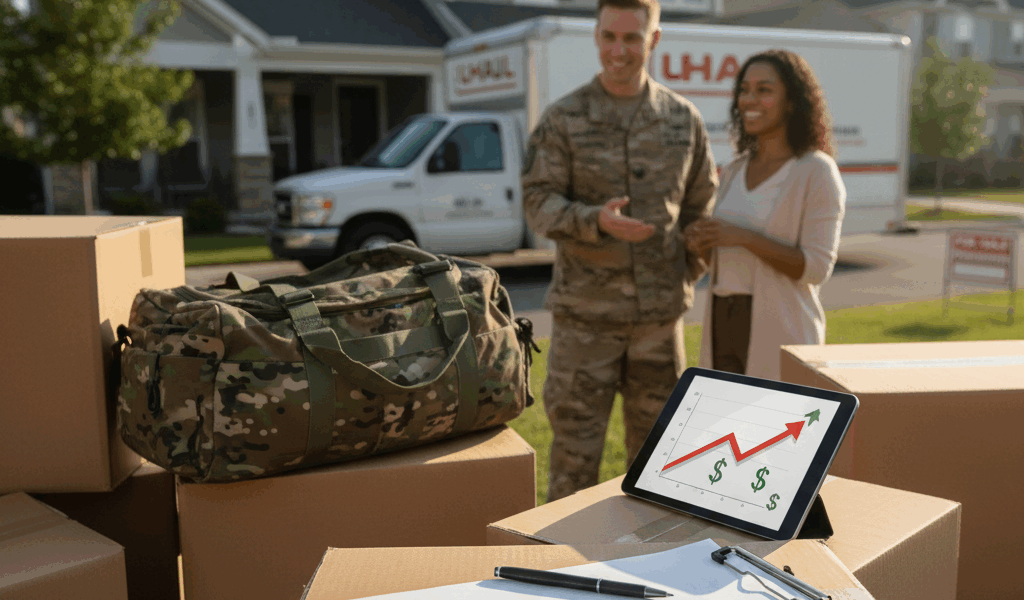

A PCS (Permanent Change of Station) move represents one of the military’s most significant logistical and financial events for families. Understanding how to maximize your weight allowance and Dislocation Allowance can mean thousands of dollars in savings or reimbursements.
Weight Allowances by Rank
Your authorized weight allowance depends on rank and dependency status. For E-1 through E-4 without dependents, allowances range from 5,000 to 7,000 pounds. E-5 through E-9 see allowances climb from 9,000 to 13,000 pounds. Officers start at 12,000 pounds for O-1 and increase to 18,000 pounds for O-10.
Having dependents adds 1,000-3,000 pounds depending on rank. The key number is your total authorized weight, which includes your household goods, unaccompanied baggage, and professional books/equipment.
Exceeding your weight allowance means paying the difference at commercial shipping rates, which can cost several dollars per pound for long-distance moves. Weigh your options carefully before packing that extra furniture.
DLA Rates and Eligibility
Dislocation Allowance partially reimburses the expenses of moving. For 2025, DLA rates range from approximately $2,000 for junior enlisted without dependents to over $5,500 for senior officers with dependents. These rates adjust annually with the locality pay tables.
You’re entitled to DLA when performing a PCS move involving a household goods shipment or when moving into or out of government quarters. Overseas moves, CONUS moves, and even some local moves can qualify. The key is that you must actually relocate your household.
DLA pays at the old duty station rate when you depart and at the new duty station rate if you’re establishing a new household. Some situations allow both. Your finance office can calculate exact entitlements based on your orders.
TLE and Temporary Lodging
Temporary Lodging Expense covers hotel costs while hunting for permanent housing. CONUS TLE provides up to 14 days combined at departure and arrival locations. Overseas moves include Temporary Lodging Allowance (TLA), which can extend significantly longer based on housing availability.
TLE pays actual lodging costs up to locality rates plus per diem for meals and incidentals. Smart service members plan their departures and arrivals to minimize gaps while maximizing TLE days at both ends.
Government Move vs. PPM/DITY
The government-arranged move (GBL) requires minimal effort. Transportation offices schedule everything, movers pack and load your goods, and you supervise. The downside is limited control over timing and handling.
Personally Procured Moves (PPM, formerly DITY) put you in charge. You rent trucks, hire labor, or use commercial movers directly. The military pays 100% of what the government move would have cost. If you complete the move for less, you pocket the difference as income.
Partial PPM combines approaches. The government ships most items while you move higher-value or immediately needed goods yourself. This hybrid approach offers flexibility without requiring you to move everything personally.
Pro-Gear Allowances
Professional gear doesn’t count against your weight allowance. This includes professional books, papers, and equipment required for official duties. Officers frequently ship hundreds of pounds of professional materials separately.
Documentation matters. Items must genuinely relate to your profession. Technical manuals, reference materials, specialized equipment, and required uniforms qualify. Personal hobby equipment, even if tangentially related to your job, doesn’t.
Pro-gear allowances top out at 2,000 pounds for officers and 500-2,000 pounds for enlisted depending on rank. Proper inventorying at origin ensures these items are weighed separately from household goods.
POV Shipping
OCONUS moves typically include shipping one or two Privately Owned Vehicles. Government-funded POV shipping saves thousands compared to commercial options. The process requires advance planning, as vehicle processing centers have specific timelines.
Prepare your vehicle properly. Remove personal items, ensure it runs, and document existing damage. Processing can take several weeks on each end. Many service members ship one vehicle early and drive a second to their departure port.
POV storage offers an alternative for short overseas tours. Government storage protects your vehicle while you’re abroad, particularly useful for unaccompanied tours where you’ll return stateside.
Maximizing Reimbursements
Keep every receipt. Moving expenses include packing materials, fuel, lodging, meals, tolls, and incidentals. For PPM moves, detailed records justify your reimbursement claims.
Weigh your vehicle before loading and after. The weight difference determines your shipment weight, which directly impacts PPM payment calculations. Use certified scales and keep tickets.
File claims promptly. Loss or damage claims have time limits. Photograph everything before and after. Annotate inventory sheets with existing damage to prevent disputes.
Work with your transportation office early. They can explain entitlements, flag potential issues, and ensure you don’t leave money on the table. Many service members lose hundreds or thousands of dollars simply by not asking the right questions.
Your PCS move is complicated, but understanding the system helps you come out ahead. Start planning early, document everything, and don’t hesitate to ask your transportation office for clarification on any entitlement.
Subscribe for Updates
Get the latest articles delivered to your inbox.
We respect your privacy. Unsubscribe anytime.