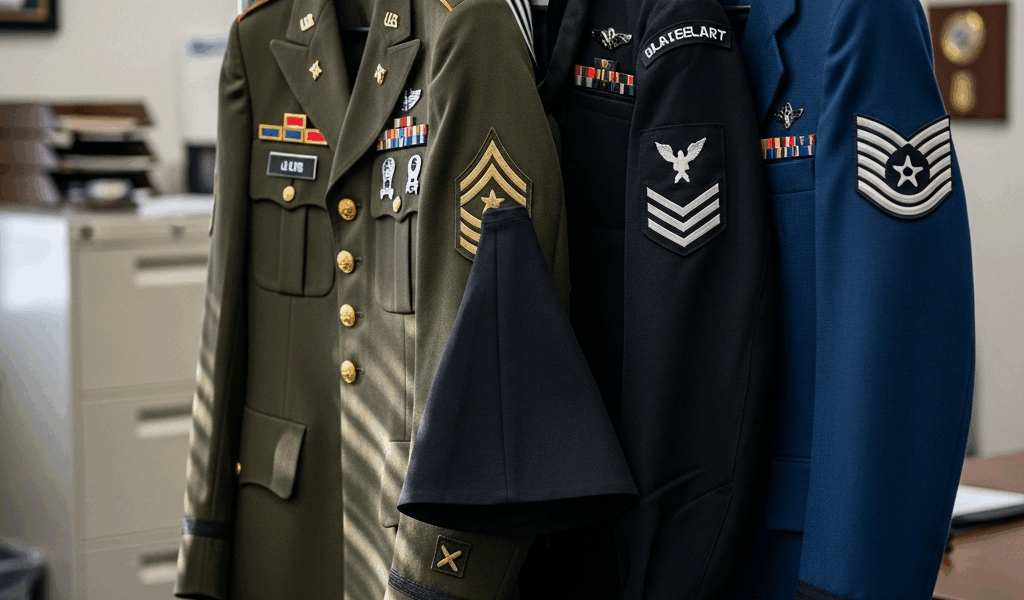
You have been thinking about transferring from one branch to another and every answer you find online is either “it is possible” with no details or “just talk to a recruiter” with no explanation of what actually happens. Here is the real process, the real timeline, and what actually gets people denied.
An inter-service transfer is bureaucratically brutal. It typically takes 12–18 months, requires approval from both your current branch and the gaining branch, and your commander can block it. But it is done every year by service members who understand the process and prepare for it.
The Inter-Service Transfer Process
An Inter-Service Transfer Authority (ISTA) request requires approval from both the losing service (your current branch) and the gaining service (the branch you want to join). Neither side is obligated to approve, and both can deny for different reasons.
Step 1: Contact a recruiter for the gaining branch. This is not the same as an enlisted recruiter at the mall. You need an in-service recruiter or a prior-service recruiter who handles branch transfers. They will assess whether the gaining branch has quotas for your rank, MOS equivalent, and entry window.
Step 2: Submit a formal request through your chain of command to your current branch’s personnel system. Army uses HRC. Navy uses BUPERS. Air Force uses AFPC. This request goes up through your commander, who must endorse or deny it. A denied endorsement kills the process before it starts.
Step 3: If your current branch approves the release, the gaining branch evaluates your package — medical records, fitness test scores, disciplinary history, security clearance status, and MOS qualification alignment.
Step 4: MEPS re-evaluation may be required. The gaining branch may require a new medical screening even if you have a current military physical on file. Standards differ between branches — Air Force medical standards are different from Army standards for the same conditions.
Step 5: If both sides approve, you receive orders to separate from your current branch and enlist/commission in the gaining branch. There is typically a short gap — days to weeks — between your separation date and your gaining branch entry date. This gap affects your pay, benefits, and leave accrual.
Requirements by Gaining Branch
Army to Air Force: the most common transfer direction. Air Force typically requires a current fitness test score meeting AF standards (different from the ACFT), a clean disciplinary record, and an AFSC vacancy matching your rank and skills. The Air Force is selective — they accept a small number of inter-service transfers annually and competition is high.
Army to Navy: the Navy requires a MEPS physical under Navy standards, a current ASVAB score (or retest), and an available rating (MOS equivalent) at your paygrade. The Navy may require additional technical training if your Army MOS does not directly convert to a Navy rating.
Any branch to Coast Guard: the Coast Guard has the most restrictive inter-service transfer program. Quotas are extremely limited and vary year to year. Prior service in another branch does not guarantee acceptance.
Any branch to Marines: the Marines accept very few inter-service transfers. Age limits and fitness standards are strictly enforced.
How Long Does a Branch Transfer Take?
Realistic timeline: 12–18 months from first conversation with a gaining branch recruiter to actually reporting to your new branch. Some transfers have completed in 6–9 months. Others have taken over 2 years. The variables that drive the timeline:
Gaining branch quota availability. The gaining branch only accepts a fixed number of inter-service transfers per fiscal year. If quotas are full, you wait — sometimes until the next fiscal year opens new slots.
MOS/AFSC mismatch. If your current MOS does not directly translate to a skill the gaining branch needs, the process stalls while both sides figure out whether retraining is available and funded.
Security clearance re-investigation. If the gaining branch requires a different clearance level than you currently hold, a new investigation adds months. TS/SCI reinvestigation can add 6–12 months alone.
Commander endorsement delay. Your current commander has no obligation to process the request quickly. If your unit is deploying, short-staffed, or your commander does not support the transfer, the paperwork sits.
What Gets You Denied and How to Avoid It
Unit manning: if your unit is designated as Non-Mission Capable (NMC) or is below minimum manning in your MOS, your commander is unlikely to release you. Check your unit’s manning status before submitting the request.
Pending legal or disciplinary action: any open Article 15, investigation, or flagging action automatically halts the transfer process. Resolve disciplinary issues completely before initiating a branch transfer request.
Weight and fitness standards: the gaining branch evaluates you against THEIR standards, not your current branch’s standards. If you pass the ACFT but do not meet Air Force PT standards, you will be denied. Research the gaining branch’s fitness and body composition standards and meet them before applying.
Critical MOS designation: if your current MOS is on the critical skills list with high SRB multipliers, the losing branch has strong incentive to deny your release. The service invested training money in your skill and does not want to lose the billet.
How to improve your odds: start early (18+ months before your desired transfer date), maintain exemplary performance evaluations, exceed fitness standards for both branches, build a relationship with the gaining branch recruiter, and get your commander’s informal support before submitting formal paperwork. Commanders who feel blindsided by a transfer request are more likely to deny or delay it.




Stay in the loop
Get the latest military plan updates delivered to your inbox.